What are Electrolytes?
Electrolytes are minerals that carry an electrical charge when dissolved in water or body fluids. Electrolytes support a number of bodily functions, including fluid balance, muscle contraction, energy production, and nerve cell communication. Common electrolytes include sodium, potassium, calcium, magnesium, and chloride, and they are found in many foods.
Below are some common food/beverage sources of the electrolytes mentioned above:
Sodium: table salt, salted nuts or nut butter, pretzels, crackers, soups, cottage cheese
Potassium: bananas, potatoes, tomatoes, citrus fruits, dark leafy greens
Calcium: yogurt, milk, cheese, kale, bok choy, tofu, almonds, chia seeds, fortified non-dairy milks and fortified juices
Magnesium: green leafy vegetables, legumes, pumpkin seeds, beans, soy foods
Chloride: table salt, seaweed, rye, tomatoes, lettuce, celery, and salt-preserved foods
We lose electrolytes in sweat, which makes electrolyte replacement a topic of great interest among many athletes.
Electrolytes and Sweat Composition
Since sodium is the most abundant electrolyte lost in our sweat, it’s typically the primary focus for athletes, and the only electrolyte that we’ll cover for the duration of this blog post. If you’ve read the previous blog post on sweat rate testing, you may recall that sweat rate, or how much fluid you lose through your skin’s sweat glands over a given period of time, can vary considerably from person to person. Similarly, the quantity of sodium lost in a given amount of sweat varies from person to person as well (1). This is often referred to as one’s sweat composition. Though sweat composition varies between different individuals, it tends to be relatively consistent for a given person from session to session. One recent study in male endurance athletes found ~13% variation between separately tested sessions, which the researchers characterized as physiologically non-meaningful (2). There are some variables that impact sweat composition, including energy expenditure and heat acclimatization (3); however, for practical purposes, it’s likely reasonable to assume that your sweat sodium concentration will remain fairly consistent (2).
How to Test Sweat Composition
Just like we can test our sweat rate, it’s also possible to test our sweat composition. Testing sweat rate is simpler, as it only requires the use of a scale and some simple math, whereas testing sweat composition typically involves the use of a specialized product or lab equipment.
Unless you’re in a research setting that uses the accurate, but logistically complex, “whole body washdown” technique, you are most likely to use absorbent patch testing to determine your sweat composition. There are several commercially available patch testing options on the market. Most of these patch companies will provide you with the patch, instructions, sweat composition results, and subsequent personalized recommendations based on your results. While the patch testing method is currently the most convenient way to quantify sweat sodium concentration, there are some limitations. A small patch is typically applied locally, e.g. to the forearm, chest, scapula, or forehead. In other words, the patch measures the sweat composition for a small region of the skin. Research shows that sweat composition varies across different regions of the body (4,5). Therefore, local sweat sodium concentration is not a valid direct measurement of whole-body sweat sodium concentration (which is what we ultimately want to understand). Some patch companies may take this into account and use various regression equations to predict whole body sweat sodium concentration from local sweat sodium concentration (5,6). If you are interested in using a patch to test your sweat sodium concentration, I recommend clarifying with the company whether or not their results take this consideration into account.
How to Use Sweat Composition Test Results
While there has been a lot of research devoted to collecting and testing sweat composition, there’s actually fairly limited research on how to interpret and apply the results (6). For this reason, you’ll see substantially different recommendations about intra-activity sodium replacement strategies from various practitioners in the field.
Despite common beliefs, there’s minimal scientific evidence to suggest that sodium consumption during exercise actually improves exercise performance itself, unless it results in more optimal fluid intake (7,8). Available research suggests that sodium consumption during exercise may have benefits, such as helping to maintain blood sodium concentration, aiding blood volume retention, and improving the taste of drinks, thereby encouraging athletes to hydrate properly (7). So, how do you know if you need to replace sodium during exercise, and if you do replace sodium, how much should you ingest?
Plan Sodium Intake Based on Fluid Intake
Currently, we don’t really have lab data from human studies to provide insight or clear guidelines on how much sodium to replace during exercise; however, we do have some research guidance based on mathematical modeling (9). A 2023 paper published by Alan McCubbin, PhD, Accredited Sports Dietitian, and sports nutrition researcher, used a validated mathematical formula to understand how much sodium needs to be replaced during exercise to maintain a steady blood sodium concentration, which is one of the main evidence-based rationales for sodium replacement during exercise. McCubbin’s modeling showed that the need for sodium replacement was largely driven by 1) fluid replacement (percent of sweat losses replaced) and 2) sweat sodium concentration (9). The more aggressively that fluid is replaced, the greater the need for sodium. Additionally, individuals with a higher sweat sodium concentration were more likely to benefit from sodium replacement (9). Therefore, sodium replacement should be mostly determined by the fluid replacement strategy, i.e., what percent of sweat losses you plan to replace with fluid intake during exercise. This makes intuitive sense when you consider that blood sodium concentration is a ratio of your total sodium content to your total body water, so it's driven mainly by how much fluid you take in relative to what you lose, not by sodium losses in isolation.
Review Sweat Rate Testing and Fluid Replacement Strategy
If you haven’t read the previous blog post on sweat rate testing, now would be a good time to revisit that, as it goes into detail about how to test sweat rate and develop a fluid replacement strategy, which is an important first step in understanding how much sodium (if any) to consume during activity. As a brief recap, fluid replacement during exercise is used to prevent dehydration, typically defined as a certain percent of body weight loss. There are different schools of thought on acceptable levels of dehydration. The American College of Sports Medicine (ACSM) recommends drinking enough to avoid losing more than 2% of your body weight during exercise, so we can use that as a reasonable guide (10). The amount of fluid, and therefore the percentage of sweat losses that needs to be replaced in order to avoid 2% body weight loss will vary depending on activity duration and one’s sweat rate. The percent of sweat losses you'll need to replace to avoid exceeding 2% body weight loss increases with both activity duration and sweat rate.
Now that we’ve reviewed how to approach replacing sweat losses, let’s get back to sodium replacement, which again, is largely determined by how much fluid is replaced. McCubbin’s mathematical modeling (9) and subsequent follow-up review paper (7) suggested that blood sodium concentration is unlikely to drop unless an athlete both replaces a high percentage of their fluid losses during exercise and has an above-average sweat sodium concentration. The exact sodium replacement recommendation depends on the combination of both factors (fluid replacement and sweat sodium concentration), but generally speaking, McCubbin classified high fluid replacement as >70% of sweat losses and above average sodium as greater than ~40 mmol/L, or roughly 1 g/L.
Build a Research-Backed Sodium Replacement Plan
To determine whether this applies to you, McCubbin’s review paper (7) suggests asking three questions about your specific training/event:
Would you benefit from replacing more than 70% of your fluid losses (i.e. is a high level of fluid replacement necessary to avoid dehydration, characterized as excessive body weight loss)?
Can you physically tolerate drinking enough fluid to hit >70% replacement? Consider gut tolerance, practical limits on fluid volume, etc.
Is it possible and practical to replace >70% of fluid losses given the logistics of your activity/sport (e.g. aid station spacing, carrying capacity, game stoppages, etc.)?
If the answer to all three of the above questions is “yes,” then you have a case for such levels of fluid replacement and therefore intentional sodium replacement during activity. In reality, this is most likely to be relevant for ultra endurance events. Even then, we only need to replace a fraction of our sodium losses. Since there are a lot of if/then questions to ask yourself in this process, I recommend reviewing the decision tree (Figure 3) in McCubbin’s review paper to assess your needs based on your specific scenario. Below is a summary of the recommendations at a high level, and below that is an image of the original decision tree itself that you can reference:
For team sports and most events lasting less than 4 hours, intentional sodium replacement is not typically needed. Sodium replacement, if any, can be based on optimizing fluid and food palatability (McCubbin refers to this approach as “season to taste”).
If your activity exceeds 4 hours, your hourly sweat rate is below 1800 milliliters per hour, and you plan to replace >70% of your fluid losses, it’s worth testing your sweat sodium concentration. From there, the specific percentage of sodium losses to replace depends on both your sweat sodium concentration and exactly how much of your fluid losses you plan to replace. Even then, the percentage of sodium replaced can range from “season to taste” (if your sweat sodium is under 40 mmol/L) all the way up to 80-90% of sodium losses (for sweat sodium above 60 mmol/L combined with 90-95% fluid replacement).
Use the decision tree figure below to determine if/when you might consider testing your sweat sodium concentration and replacing your sodium losses during activity.
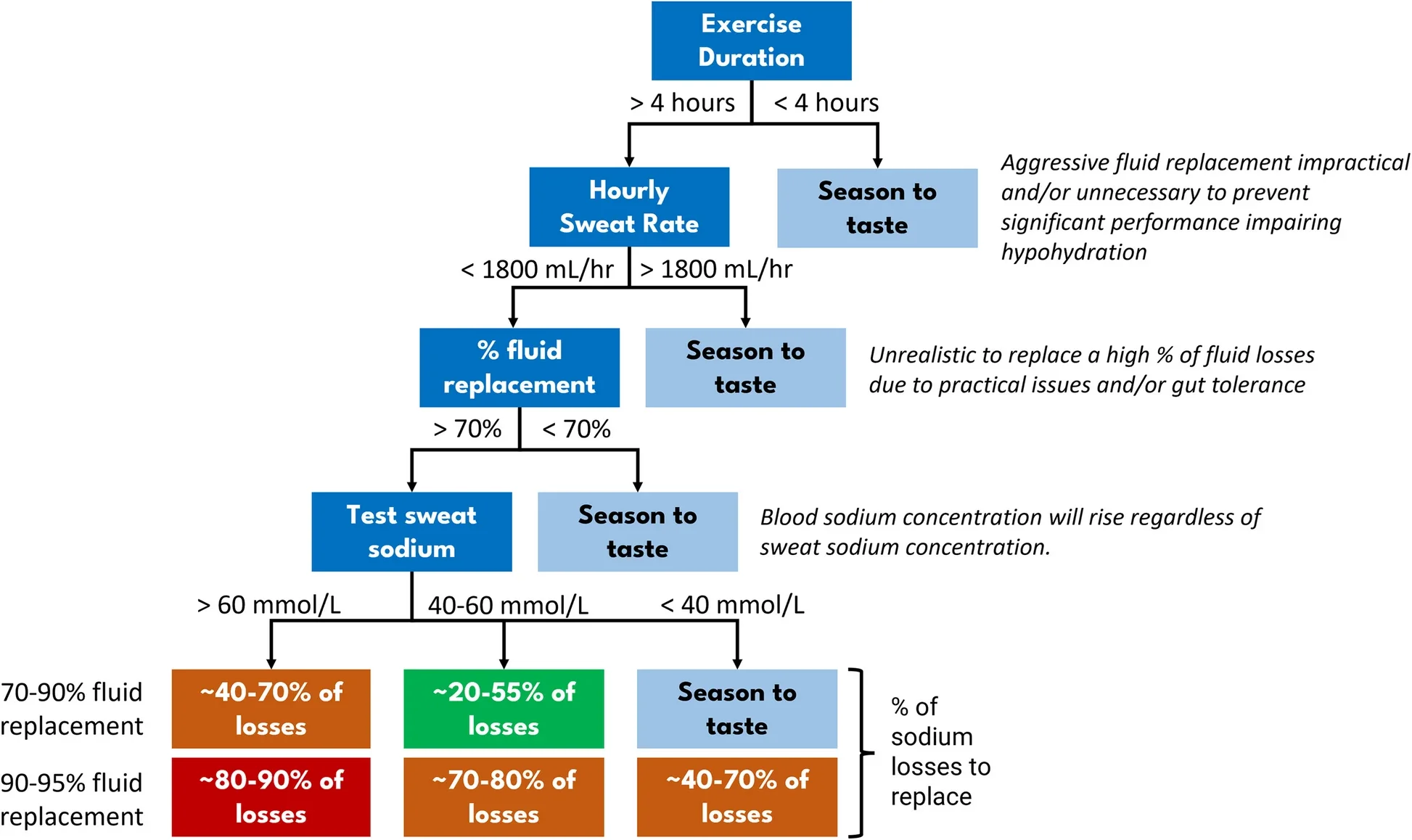
Figure 3 from McCubbin, A.J. (2025). Sodium intake for athletes before, during and after exercise: review and recommendations. Performance Nutrition, 1(1), 11. https://doi.org/10.1186/s44410-025-00011-9. Licensed under CC BY 4.0. No changes were made to the original figure.
Putting It Into Practice
Let’s walk through an example integrating the concepts discussed in the previous sweat rate testing blog post and the current sweat sodium testing post.
Let’s say that you're a 75 kg athlete training for a 6-hour trail ultramarathon, with a tested sweat rate of 1 L/hour (1000 mL/hour).
Step 1 - Determine fluid replacement strategy
First, let's figure out your fluid replacement target using the 2% body weight loss threshold discussed earlier. Over 6 hours, your total sweat loss would be:
1 L/hour × 6 hours = 6 L total sweat loss (≈ 6 kg)
To stay under a 2% body weight loss, you can afford to lose:
75 kg × 0.02 = 1.5 kg (≈1.5 L)
That means your fluid intake target is:
6 L total sweat loss − 1.5 L acceptable deficit = 4.5 L over 6 hours, or about 750 mL/hour
As a percentage of total sweat losses, that's:
4.5 L / 6 L = 75% fluid replacement
Now that we’ve determined our fluid replacement strategy/goals, we can move onto our sodium replacement strategy.
Step 2 - Consult the decision tree
Running through the decision tree referenced throughout this post, we need to ask three questions to determine if sweat composition testing and targeted sodium replacement are warranted:
Does your event exceed 4 hours? Yes, it's 6 hours.
Is your sweat rate under 1800 mL/hour? Yes, yours is 1000 mL/hour.
Are you planning to replace more than 70% of your fluid losses? Yes, your plan is to replace 75% of fluid losses.
Since the answer to all three is "yes," this is a scenario where sweat sodium testing and targeted sodium replacement are worth considering.
Step 3 - Test sweat sodium concentration
Let's say you get a sweat composition test and your sweat sodium concentration comes back at 55 mmol/L, putting you in the 40-60 mmol/L band listed on the decision tree above.
Step 4 - Determine your sodium replacement target
Cross-referencing your sweat sodium band (40-60 mmol/L) with your fluid replacement plan (75%, which falls in the 70-90% range) on the decision tree, the recommendation is to replace roughly 20-55% of your total sodium losses.
To translate that into a practical number, first calculate your total sodium losses:
Sweat sodium concentration: 55 mmol/L ≈ 1265 mg/L (to convert mmol to mg, we multiply by sodium's atomic weight of ~23. 55 x 23 = 1265)
Sodium lost per hour based on previously tested sweat rate: 1 L/hour × 1265 mg/L ≈ 1265 mg/hour
Applying the recommended replacement range (20-55%) directly to that hourly rate:
20% of 1265 mg/hour ≈ 250 mg/hour
55% of 1265 mg/hour ≈ 695 mg/hour
So in this scenario, a reasonable sodium replacement target would fall somewhere between roughly 250-695 mg per hour, depending on individual factors like gut tolerance, food/drink palatability and sports nutrition product preferences, and how race day conditions actually unfold. Given the wide range, I’d recommend that you test out different amounts during training to see what feels best.
Final Thoughts
As you can see, there can be a lot that goes into determining when/if you need to test your sweat composition and when/if you need to develop a targeted plan for replacing sodium losses. You may see different advice from other practitioners than what’s provided in this blog. For example, some practitioners recommend a flat sodium target (in mg/hour or mg/L of fluid) for anyone exercising over 60 minutes or exercising in hot weather, regardless of an individual’s fluid replacement plan or sweat sodium concentration. I’ve tried to stay true to the most current performance nutrition research that I can find, which suggests that sodium needs are more individualized than that and should depend heavily on how much fluid you’re replacing.
If you’re confused about how to apply this information to your training or if you want help figuring out a hydration and fueling strategy, reach out to me with questions or book an appointment to work together 1:1.
References
Baker, L.B., Wolfe, A.S. Physiological mechanisms determining eccrine sweat composition. Eur J Appl Physiol 120, 719–752 (2020). https://doi.org/10.1007/s00421-020-04323-7
Goulet EDB, Jeker D, Claveau P, Deshayes TA, Pancrate T, Abed MEF, Desroches AJ, Hoffman MD, Gendron P, Lajoie C, et al. Temporal Stability, Reproducibility and Predictability of Whole-Body Sweat Sodium Concentration During Prolonged Cycling in the Heat with Ad Libitum and Programmed Drinking. Nutrients. 2026; 18(6):989. https://doi.org/10.3390/nu18060989
Baker LB, De Chavez PJD, Nuccio RP, et al. Explaining variation in sweat sodium concentration: effect of individual characteristics and exercise, environmental, and dietary factors. J Appl Physiol (1985). 2022;133(6):1250-1259. doi:10.1152/japplphysiol.00391.2022
Taylor NA, Machado-Moreira CA. Regional variations in transepidermal water loss, eccrine sweat gland density, sweat secretion rates and electrolyte composition in resting and exercising humans. Extrem Physiol Med. 2013;2(1):4. Published 2013 Feb 1. doi:10.1186/2046-7648-2-4
Baker LB. Sweat testing methodology in the field: challenges and best practices. Sports Science Exchange. Gatorade Sports Science Institute. Published January 2017. Accessed July 15, 2026. https://www.gssiweb.org/sports-science-exchange/article/sse-161-sweat-testing-methodology-in-the-field-challenges-and-best-practices
McCubbin AJ. Sweat testing. mysportscience. Published July 7, 2022. Updated March 13, 2026. Accessed July 15, 2026. https://www.mysportscience.com/post/sweat-testing
McCubbin AJ. Sodium intake for athletes before, during and after exercise: review and recommendations. Perform Nutr. 2025;1:11. doi:10.1186/s44410-025-00011-9
McCubbin AJ. How much sodium do I need? mysportscience. Published July 7, 2022. Updated March 12, 2026. Accessed July 15, 2026. https://www.mysportscience.com/post/how-much-sodium-do-i-need
McCubbin AJ. Modelling sodium requirements of athletes across a variety of exercise scenarios - Identifying when to test and target, or season to taste. Eur J Sport Sci. 2023;23(6):992-1000. doi:10.1080/17461391.2022.2083526
American College of Sports Medicine, Sawka MN, Burke LM, et al. American College of Sports Medicine position stand. Exercise and fluid replacement. Med Sci Sports Exerc. 2007;39(2):377-390. doi:10.1249/mss.0b013e31802ca597